
Complete Workshop Layout Guide for Automatic Blow Molding Machines: Function Zones, Air Lines, and Material Flow
Executive Introduction
Designing a high-efficiency plant layout for automatic stretch blow molding machines (SBM) requires much more than simply positioning machinery on a factory floor. Operational productivity, overall equipment effectiveness (OEE), and scrap reduction depend directly on how efficiently utility networks, material transport routes, and mold maintenance zones are structured. Improper air line sizing, crisscrossing material logistics, or poor thermal management surrounding the tooling can introduce pressure drops, preform contamination, and prolonged mold changeover downtime.
As a leading Chinese engineering enterprise specializing in precision PET preform molds and high-performance blow molding machine molds, Yushun Machine presents this comprehensive workshop planning guide. This white paper outlines strategic functional zoning, pneumatic pipe routing, resin material flow, and tooling integration necessary to maximize output across modern packaging facilities.
1. Strategic Functional Zoning in Blow Molding Plants
To eliminate cross-contamination, streamline operator movement, and ensure strict food-grade packaging safety, a high-volume blowing plant must be segregated into five primary functional zones:
- Raw Material Storage & Dehumidification Zone: Located upstream near loading bays, housing virgin PET resin silos, desiccant dryers, and masterbatch dosing units to prevent moisture absorption prior to preform injection or blowing pre-heating.
- Primary Blow Molding Production Area: The main clean operating hall housing high-speed automatic blowing machines and preform feeding systems. Maintains positive air pressure and temperature-controlled ambient conditions (20°C–25°C).
- Compressor & Utility Utility Room: Isolated from the clean production floor to minimize ambient noise and thermal radiation. Houses high-pressure (30–40 bar) and low-pressure (7–10 bar) air compressors, air storage receivers, and refrigerant dryers.
- Chilled Water & Thermal Management Station: Houses central chillers, cooling towers, and circulating pump skids dedicated to supplying precise mold cooling temperatures.
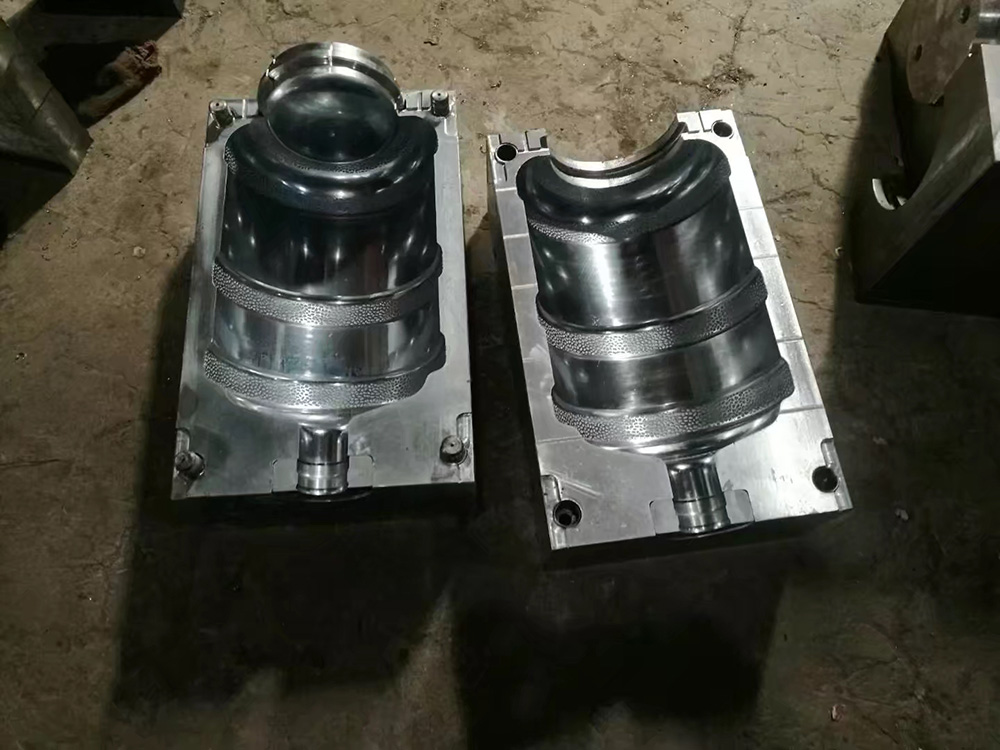
- Tooling Maintenance & Mold Storage Vault: A clean, climate-controlled staging area equipped with overhead gantry cranes, ultrasonic cleaning tanks, and specialized maintenance rigs for bottle blowing machine molds and PET preform molds.
2. High-Pressure Pneumatic Line Engineering and Loop Routing
Blow molding operations rely on two distinct compressed air systems: low-pressure air (7–10 bar) for pneumatic actuators and high-pressure air (30–40 bar) for stretch blowing PET containers. Inadequate piping design causes pressure drop spikes, resulting in poor bottle base clearance and wall thickness defects.
Pneumatic Design Best Practice: Always utilize a closed-loop ring main piping configuration constructed from smooth-bore stainless steel or aluminum alloy. Ring main architecture supplies compressed air from multiple directions, preventing instantaneous pressure drops during simultaneous multi-cavity blowing cycles.
A. Air Line Sizing and Velocity Control
Piping internal diameters must be calculated to keep high-pressure air flow velocity below 10 m/s. High air velocity causes excessive friction loss and turbulence, leading to starvation at the blowing nozzles during rapid stretching sequences.
B. Moisture Recovery and Air Recycling Integration
Modern plant layouts should integrate air recovery systems that capture up to 50% of the high-pressure exhaust air after bottle blowing. This recovered air is redirected to feed low-pressure machine actuation or upstream preform blowing steps, significantly lowering energy consumption.
3. Optimized Material Flow and Logistics Engineering
A unidirectional, non-crossing material flow pattern is essential to achieve lean manufacturing principles and minimize forklift transit time within the facility:
Raw PET Preforms / Resin → Preform Elevator → Blow Molding Tooling → Air Conveyor / Palletizer → Finished Goods Storage
- Closed Octabin / Hopper Feeding: Transport preforms via automated octabin tippers and enclosed vacuum loaders to prevent airborne dust contamination on preform necks.
- Downstream Conveying Integration: Position high-speed stainless steel air conveyors directly at the blow mold discharge outlet to carry blown PET bottles smoothly into downstream filling machinery without manual contact.
4. Engineering Precision Tooling Integration: The Yushun Machine Advantage
Even the most perfectly planned workshop layout cannot overcome the limitations of poorly manufactured mold tooling. Tooling changeovers represent one of the single largest sources of planned downtime in rigid packaging plants. Yushun Machine designs high-cavity PET blowing molds and PET preform molds engineered for rapid installation and maximum thermal stability.
- Rapid Mold Changeover Mechanisms: Yushun Machine blow molds feature standardized quick-change locking mechanisms, water manifold quick-connectors, and self-aligning positioning pins, reducing mold swap times from hours to minutes.
- Optimized Conformal Water Distribution: Internal cooling channels are CNC-machined to ensure balanced water flow across all cavities, preventing condensation sweat on mold faces and maintaining uniform wall cooling.
- High-Grade Structural Metallurgy: Constructed from high-tensile aircraft-grade aluminum or hardened S136 stainless steel, Yushun Machine tooling withstands millions of continuous high-pressure clamping cycles without parting line deformation.
Plant Layout & Utility Specification Benchmark
The matrix below outlines key layout requirements and utility allocations for a standard 16-cavity automatic high-speed blow molding line:
| Facility Parameter | Standard Engineering Specification | Yushun Machine Optimized Tooling Standard | Operational Impact |
|---|---|---|---|
| High-Pressure Air Line (30-40 Bar) | DN50 Stainless Steel Ring Main | Direct low-friction inlet porting | Zero pressure drop during high-speed blowing |
| Mold Cooling Water Flow Rate | 120–150 L/min @ 10°C–12°C | Balanced Conformal Multi-Circuitry | Eliminates base deformation and reduces cycle time |
| Workshop Floor Load Capacity | ≥ 3.0 Tons / m² reinforced concrete | Vibration-damped mold base interface | Prevents machine misalignment and core wear |
| Average Mold Changeover Time | 120–180 Minutes (Legacy Molds) | ≤ 35 Minutes (Quick-Change Yushun Molds) | Significantly increases plant OEE and flexibility |
Yushun Machine: Turnkey Blow Molding Tooling Experts
Maximizing profitability in PET container manufacturing requires combining a well-engineered plant layout with world-class mold manufacturing. Poor utility planning, improper cooling lines, or low-precision mold machining will lead to high scrap rates, frequent line stoppages, and lost capacity.
Yushun Machine is a trusted Chinese supplier specializing in high-performance bottle blowing machine molds, PET blowing molds, and PET preform molds. Engineered with high-grade steel and aluminum alloys, quick-change features, and precision cooling circuits, Yushun Machine enables global packaging producers to achieve seamless plant integration, faster cycle times, and maximum return on investment.
Optimize your packaging plant layout and upgrade your blowing tooling performance. Contact Yushun Machine today for specialized technical layout consultations and mold engineering support.